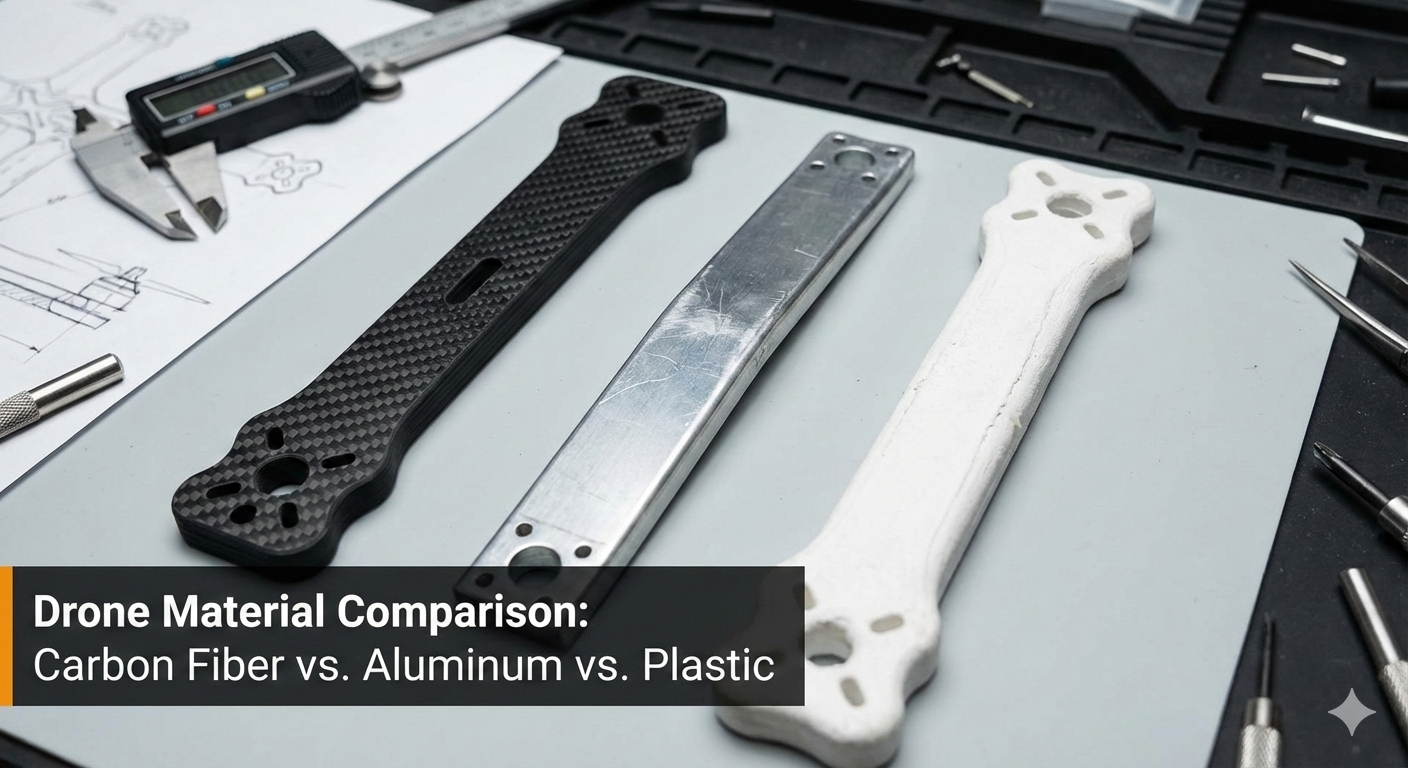
If you are planning to build a drone or upgrade an existing frame, the first and most critical question is: “What is the best material for a drone body?”
The answer depends on your budget and application, but for most performance-driven scenarios—whether it’s FPV racing, aerial photography, or industrial surveying—there is a clear winner.
In this guide, مركبات E-YOUNG breaks down the three most common materials: Plastic, Aluminum, and Carbon Fiber, to help you make the right choice.
1. Molded Plastic & Nylon (The Budget Choice)
If you are planning to build a drone or upgrade an existing frame, the first and most critical question is: “What is the best material for a drone body?”
The answer depends on your budget and application, but for most performance-driven scenarios—whether it’s FPV racing, aerial photography, or industrial surveying—there is a clear winner.
In this guide, مركبات E-YOUNG breaks down the three most common materials: Plastic, Aluminum, and Carbon Fiber, to help you make the right choice.
2. Aluminum (The Old School Choice)
Before composites became affordable, aluminum was the go-to metal.
-
Pros: It is readily available and inexpensive.
-
Cons: Aluminum bends upon impact. Once a drone arm is bent, it is nearly impossible to straighten perfectly, rendering the frame useless. Furthermore, aluminum is heavy and transmits high-frequency motor vibrations directly to the camera, causing “jello” in video footage.
-
Verdict: Outdated for modern drone frames.
3. Carbon Fiber (The Professional Choice)
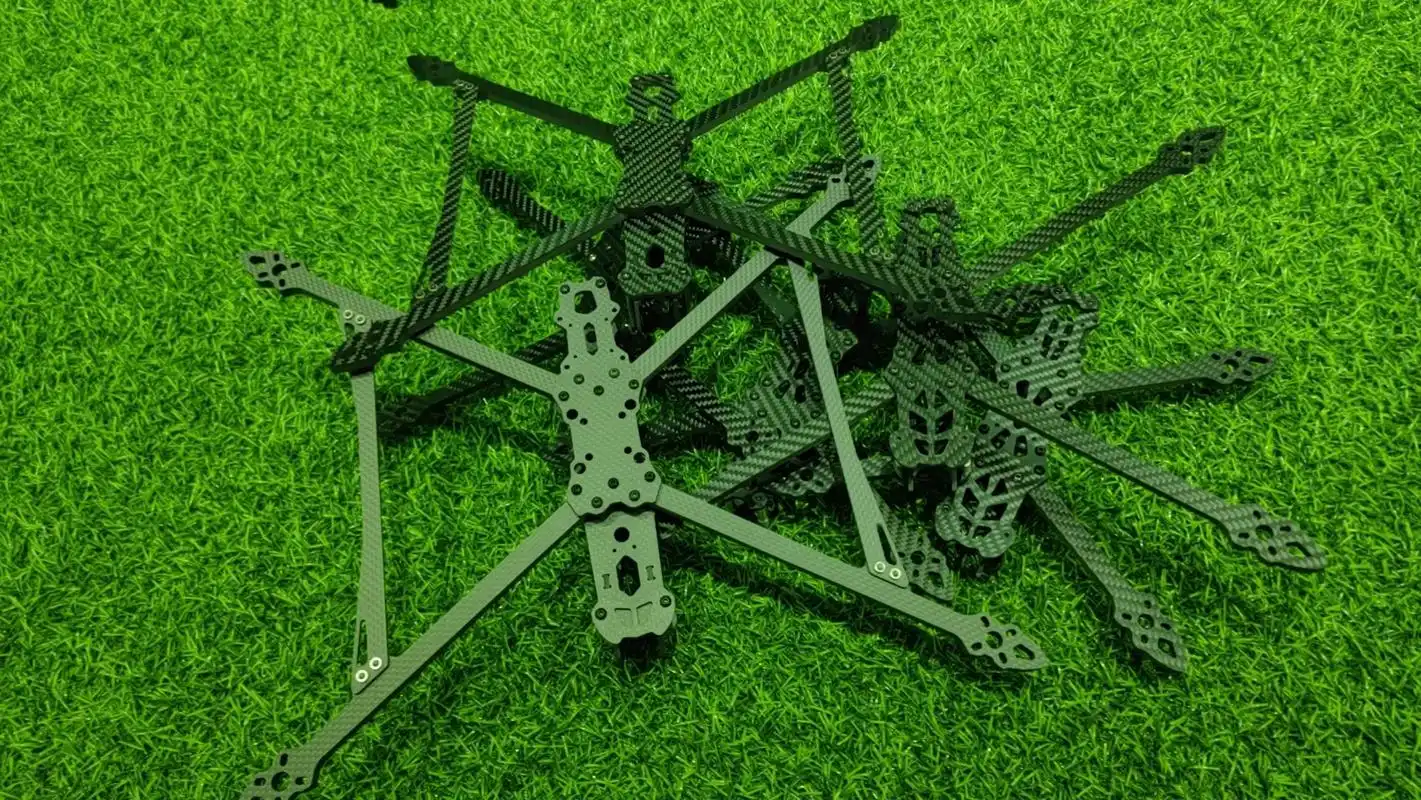
So, what is the best material for a drone body? For 95% of high-end drones, the answer is ألياف الكربون.
Carbon fiber composites have revolutionized the aerospace industry, and they do the same for drones. Here is why:
-
Unmatched Strength-to-Weight Ratio: Carbon fiber is significantly lighter than aluminum but stronger than steel. This allows you to carry larger batteries and heavier cameras without sacrificing flight time.
-
High Stiffness (Rigidity): Unlike plastic, carbon fiber plates are incredibly stiff. This stiffness ensures that your motors stay perfectly aligned even during high-G maneuvers, providing “locked-in” flight characteristics.
-
Crash Durability: High-quality carbon fiber (like the 3K sheets we manufacture) does not bend. In a crash, it typically holds its shape or breaks sacrificially to protect expensive electronics, rather than warping permanently like aluminum.
Material Comparison Summary
| الميزة | Plastic | Aluminum | Carbon Fiber (E-YOUNG) |
|---|---|---|---|
| الوزن | Heavy (relative to strength) | Heavy | Ultra-Light |
| الصلابة | Low (Flexible) | Medium | High (Rigid) |
| المتانة | Good (Bounces) | Poor (Bends) | Excellent (High Impact) |
| Vibration Damping | Medium | فقير | ممتاز |
| الأفضل لـ | Toys | DIY Projects | FPV, Cinema, Industrial UAVs |
Why Choose E-YOUNG Carbon Fiber Plates?
If you have decided that carbon fiber is the best material for your drone body, the next step is choosing the right supplier. Not all carbon fiber is created equal. Cheap plates often contain air bubbles or use low-quality resin.
في مركبات E-YOUNG, we provide professional-grade solutions:
-
Premium Materials: We use high-strength Toray T300/T700 carbon fiber with a clear, bubble-free finish.
-
Variety of Thicknesses: From 1.5mm top plates to 6mm heavy-duty arms, we have the stock to suit your design.
-
CNC Precision: We don’t just sell sheets; we can cut your custom frame design with 0.1mm tolerance.


 Arabic
  English
  German
  Spanish
  French
  Italian
  Dutch
Dutch  Swedish
  Portuguese
  Korean